Standing in Line, Finding Your Mind: The Quiet Wisdom Behind Yanase-Minami's Queue Culture
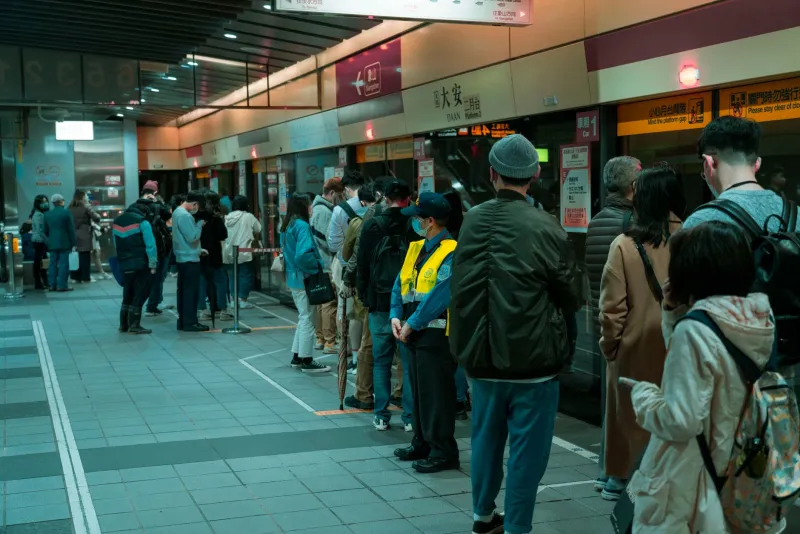
Let's be honest. In most American cities, a line is a battlefield. Someone's always cutting, someone's always sighing, and the whole experience feels like a minor civic emergency. Waiting is something we endure, not something we practice. But spend a Saturday morning in Yanase-Minami — maybe outside the beloved tonkatsu spot on the corner, or at the platform edge of the local rail stop — and you'll start to wonder if we've been doing this completely wrong.
Queuing here isn't passive. It's intentional. And once you see it clearly, it's hard to unsee.
The Line as a Living Agreement
What strikes most visitors first isn't the length of the lines in Yanase-Minami — it's how calm they are. People aren't craning their necks. Nobody's refreshing their phone every thirty seconds in performative impatience. There's a stillness to the whole thing that feels almost choreographed, even when it isn't.
That's because a queue here functions less like a random cluster of strangers and more like a temporary social contract. Everyone who joins understands the terms instinctively: you arrive, you find your place, you hold it with quiet confidence. No jostling. No aggressive shuffling forward the moment the person ahead moves an inch. The line breathes as a unit.
Locals will tell you this isn't about rigid rule-following. It's closer to something they'd describe as meiwaku — a deep aversion to inconveniencing others. When you cut a line in Yanase-Minami, you're not just being rude. You're disrupting a shared agreement, and that carries real social weight. The collective disapproval, delivered entirely through silence and the subtlest of glances, is somehow more corrective than any confrontation.
The Architecture of Waiting
The neighborhood has also developed physical systems that reinforce this culture in ways that feel almost invisible until you pay attention. Restaurants with popular weekend rushes often set up discreet marker systems — a small sign, a numbered slip, a host who emerges periodically to update the group. Nobody needs to hover anxiously at the door. You take your number, you step back, you exist in the world for a while.
At transit stops, painted guides on the platform floor indicate exactly where to stand for each train car door. People line up in two neat columns, leaving the center path clear for passengers getting off. It's a design solution, sure, but it also reflects something more philosophical: the idea that everyone's movement matters equally, and the system should honor that rather than reward whoever happens to be most aggressive.
Compare that to, say, a New York subway platform, where boarding is essentially a contact sport, and the gap in approach becomes pretty stark.
Waiting as a Meditative Act
Here's where things get interesting for anyone who's spent time reading about Zen philosophy — and you don't need to be a practitioner to feel the resonance. Zen has long held that the quality of attention you bring to ordinary moments is the whole game. Washing dishes, walking slowly, sitting without agenda. Waiting, in this framework, isn't dead time. It's an opportunity.
In Yanase-Minami, that idea seems to have seeped into the cultural groundwater without anyone necessarily naming it. People in line aren't trying to escape the wait. They're not frantically optimizing. An older woman might be watching the street. A younger guy might be doing nothing that looks like anything at all. There's a tolerance for unstructured time that feels radical by American standards, where productivity has become such a default mode that even leisure gets scheduled and tracked.
What if waiting — real, unhurried waiting — was actually good for us? Not as a thought experiment, but as a daily practice built into the rhythm of ordinary life?
What Fairness Looks Like in Practice
One of the subtler things the queue culture in Yanase-Minami communicates is a particular idea about fairness. In the U.S., we often talk about fairness in grand terms — systemic, legal, institutional. But fairness in a neighborhood line is almost more pure: you arrived at a certain time, so you occupy a certain position. Full stop. No exceptions for status, no workarounds for people who seem important or in a hurry.
That kind of low-stakes, everyday equity is easy to underestimate. But it shapes how a community feels to live in. When everyone trusts that the system works the same for all of them, a baseline of social trust builds up over time. The line becomes a small, repeated proof that the neighborhood is functioning the way it should.
For Americans used to the quiet resentment that bubbles up when someone in an airport cuts to the front with a confident stride, this might sound almost utopian. But it's not some engineered social experiment — it's just what happens when a community consistently prioritizes dignity over convenience.
Bringing It Home
Nobody's suggesting Americans need to import Japanese queue etiquette wholesale. Cultural context matters, and what works in Yanase-Minami grew out of specific social and historical soil. But there are a few things worth stealing in the best possible sense.
First: the idea that waiting doesn't have to be optimized away. The impulse to fill every pause with a podcast, a scroll, or a task is understandable, but it also means we're rarely just present anywhere. The locals standing outside that tonkatsu spot on a Saturday aren't missing out on something. They're already somewhere.
Second: the physical design piece is genuinely worth considering. Cities and businesses that build better waiting systems — clearer guidance, numbered systems, designated spaces — reduce friction in ways that make everyone calmer. That's not a cultural value, it's just smart infrastructure.
And third, maybe most importantly: the recognition that how we treat strangers in small, anonymous moments says something real about who we are collectively. The Yanase-Minami queue isn't policed or enforced. It just is, because enough people believe in it. That kind of soft social infrastructure is harder to build than a painted line on a platform floor — but it might matter more.
Next time you're stuck in a slow-moving line at the grocery store or the coffee shop, maybe try something different. Don't fight it. Don't fill it. Just wait, and see what happens.