Living Big in Small Spaces: The Yanase-Minami Apartment Philosophy That's Changing How We Think About Home
When Less Space Means More Life
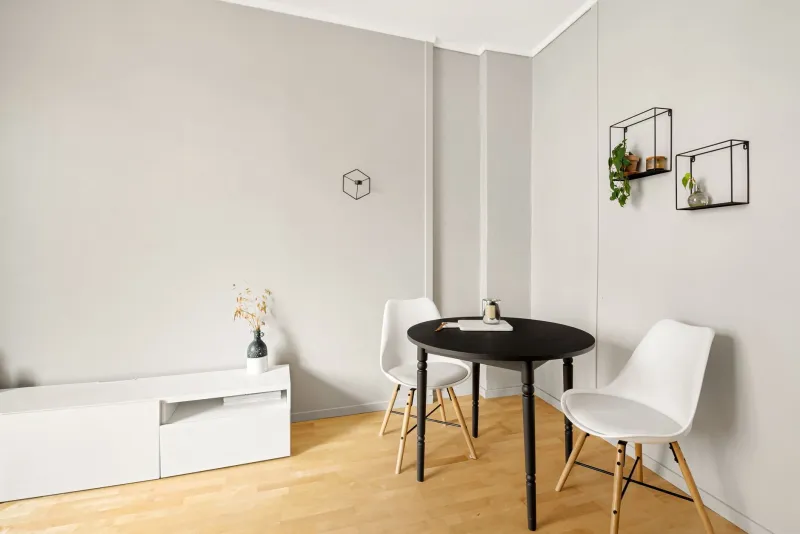
Walk into Keiko Tanaka's apartment in Yanase-Minami and your first instinct might be to apologize—like you've wandered into someone's closet by mistake. The whole unit clocks in at around 280 square feet. There's a lofted sleeping area, a kitchen the size of a generous hallway, and a living space that doubles as a dining room, home office, and occasional yoga studio. And yet, standing in it, you don't feel cramped. You feel... calm.
"Americans always look a little panicked when they first come in," Keiko says with a laugh, handing over a small ceramic cup of green tea. "Then they sit down, and after a few minutes they stop looking around for the rest of it."
That reaction—the shift from anxiety to ease—is kind of the whole story here. Yanase-Minami isn't exceptional by Japanese urban standards. Compact apartments are just a fact of life in dense neighborhoods across Japan. But what residents here have developed over generations is something worth paying close attention to, especially if you're an American staring down a $2,200-a-month rent bill for a studio in Austin or Portland.
The Philosophy Before the Furniture
Before we get into fold-out beds and magnetic knife strips, it helps to understand that Japanese spatial efficiency isn't primarily a design trend. It's rooted in something older and more philosophical—a cultural comfort with impermanence and a resistance to accumulation that predates Marie Kondo by about a thousand years.
Hiroshi Mabe, a local architect who has designed several residential units in the Yanase-Minami area, explains it this way: "In the West, a home is often a statement of arrival. You fill it to show what you have. Here, a home is more like a practice. You edit it constantly."
That word—edit—comes up a lot. Residents don't just organize their belongings once and call it done. They return to their spaces regularly, reassessing what earns its place. Seasonal rotation is common: winter bedding goes into vacuum storage bags the moment the weather turns; decorative items cycle in and out rather than accumulating on every available surface.
This isn't austerity. Keiko's apartment has personality—a small shelf of well-loved books, a single framed print, a few plants on the windowsill. But each object has clearly been chosen rather than defaulted into existence.
The Hardware: What Actually Makes It Work
Okay, let's talk about the practical stuff, because there's real genius here.
Storage in Yanase-Minami apartments tends to go vertical. Floor-to-ceiling shelving is standard, not aspirational. Closets—called oshiire—are designed with a double-tier hanging system and dedicated zones for bedding, seasonal items, and everyday clothing. Nothing shares a space with something it doesn't belong with.
Furniture pulls double and triple duty. A low table folds flat against the wall. Ottomans open up to hold spare linens. Beds are often platform-style with deep drawers underneath, eliminating the need for a separate dresser entirely. In one apartment we visited, the homeowner had installed a Murphy-style futon setup that transformed the bedroom into a proper home office during daylight hours—complete with a standing desk that folded out from the same wall unit.
"The key is that nothing is purely decorative and nothing is purely functional," says Mabe. "Everything has to justify itself in two ways at once."
Kitchens deserve special mention. Even in micro-units, Japanese kitchens tend to be strikingly well-organized. Magnetic strips, hanging rail systems, and under-counter hooks keep tools visible and accessible without eating up counter space. Dishes are often minimal by design—sets of four rather than twelve, because why store what you don't regularly use?
The Emotional Side of Small
Here's where it gets interesting for American readers. The U.S. has spent decades in a love affair with square footage. Bigger houses, bigger cars, bigger portions. The cultural message has been consistent: more space equals more freedom equals more happiness.
But a growing body of research—and a lot of anecdotal evidence from people who've downsized voluntarily—suggests the opposite might be true. Smaller, intentionally designed spaces reduce decision fatigue. They make cleaning faster and less psychologically draining. They force a kind of curation that, once practiced, starts to feel like relief rather than restriction.
Tomoko, a freelance illustrator who has lived in her Yanase-Minami apartment for six years, puts it plainly: "I used to have a bigger place. I spent half my weekends dealing with it—cleaning things I didn't use, organizing things I didn't need. Now I have my weekends back."
She's not alone in that sentiment. Multiple residents we spoke with described their compact living arrangements not as a compromise but as an active choice they've come to defend enthusiastically.
What Americans Can Actually Take Home
You don't need to move into a 280-square-foot apartment to apply any of this. The principles scale.
Start with the edit. Go room by room and ask not just "do I use this?" but "does this earn its space?" Those are different questions. A sentimental object might earn its space even if you never use it. A piece of furniture you keep meaning to use but don't might not.
Think vertically. American homes are chronically under-utilizing wall space. Floor-to-ceiling shelving in a living room or bedroom can double your storage without touching your floor plan.
Buy furniture that does two things. The market for multifunctional furniture has exploded in the U.S.—storage ottomans, sofa beds, extendable dining tables. Yanase-Minami residents have been living this way for decades. It works.
And maybe most importantly: resist the reflex to fill empty space. In Japanese interior philosophy, ma—the concept of meaningful negative space—applies to rooms just as much as it does to music or visual art. An empty corner isn't a failure of decoration. It's a breath.
The Bigger Picture
As housing costs continue to climb across American cities and the tiny house movement graduates from novelty to necessity for many households, the lessons coming out of places like Yanase-Minami feel less like exotic inspiration and more like practical roadmaps.
Keiko walks us to the door of her apartment—a journey of about twelve steps—and gestures at the space behind her with something that looks a lot like pride.
"People think I'm missing something," she says. "But I don't feel like anything is missing. I feel like I found out what I actually need."
That might be the most American-applicable lesson of all.

