Lost on Purpose: What Yanase-Minami's Backstreet Wanderers Know That Google Maps Doesn't
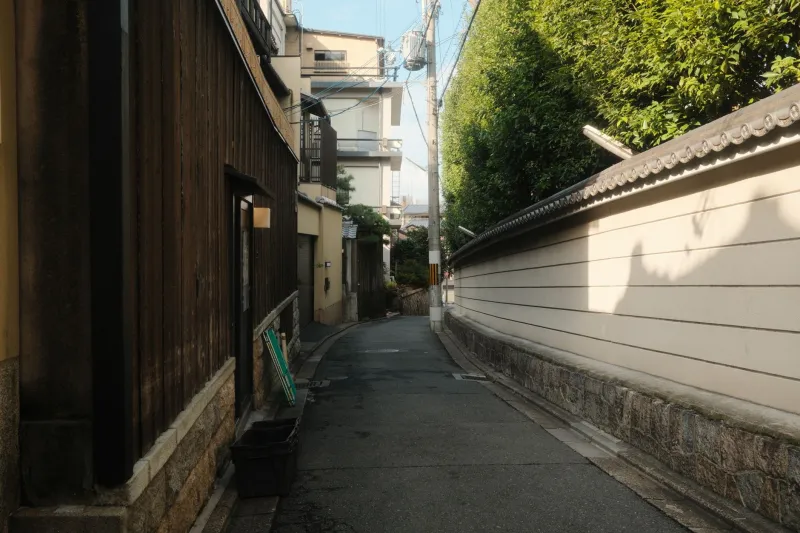
You'd think a neighborhood this compact would be easy to rush through. Yanase-Minami isn't sprawling — it's the kind of place where you can theoretically walk from one end to the other before your coffee goes cold. And yet, ask a local for directions and you'll notice something strange: they'll describe a route with at least two unnecessary turns, a detour past a tofu shop that's been there since before their parents were born, and a shortcut that somehow takes longer than the main road.
This isn't confusion. It's culture.
The Route Nobody Taught You
In most American cities, navigation is a solved problem. You open an app, you follow the blue line, you arrive. Efficiency is the whole point. Time is money, and the shortest path between two points is a straight one — end of conversation.
But spend a few mornings watching Yanase-Minami residents move through their neighborhood and you start to notice a pattern that breaks all those rules. A retired schoolteacher cuts down a narrow alley behind the dry cleaner — not because it's faster, but because the woman who runs the pickled vegetable stand sets out her new batches around 8 a.m. and he likes to see what came in fresh. A young woman in her twenties swings three blocks out of her way every Tuesday to pass the tiny park where an elderly man feeds pigeons and always has something funny to say. A delivery driver on a bicycle takes the long loop around the temple wall, not because his GPS told him to, but because the light hits the stone lanterns differently in the morning and it still gets him every time.
None of this is accidental. In Yanase-Minami, the detour is a deliberate act.
Slowness as Strategy
Here's the counterintuitive part: many of the locals who take these winding routes aren't late. They aren't disorganized. They aren't wasting time in any meaningful sense. What they're doing is something closer to what behavioral scientists call "environmental priming" — setting themselves up mentally and emotionally for whatever comes next by moving through a space they know deeply and find genuinely nourishing.
Think about the difference between sitting in bumper-to-bumper traffic on the 405 and taking a slightly longer surface street that runs past a farmer's market and a coffee shop you like. Technically, both get you to work. But one of them gets you there wound tight and already annoyed, while the other gives your brain a few minutes of low-stakes sensory input — color, smell, maybe a friendly wave from someone you half-recognize. You arrive as a slightly better version of yourself.
Yanase-Minami locals seem to understand this intuitively, even if they'd never frame it in those terms. The backstreet isn't the backup plan. It's the main plan.
What You Actually Find Back There
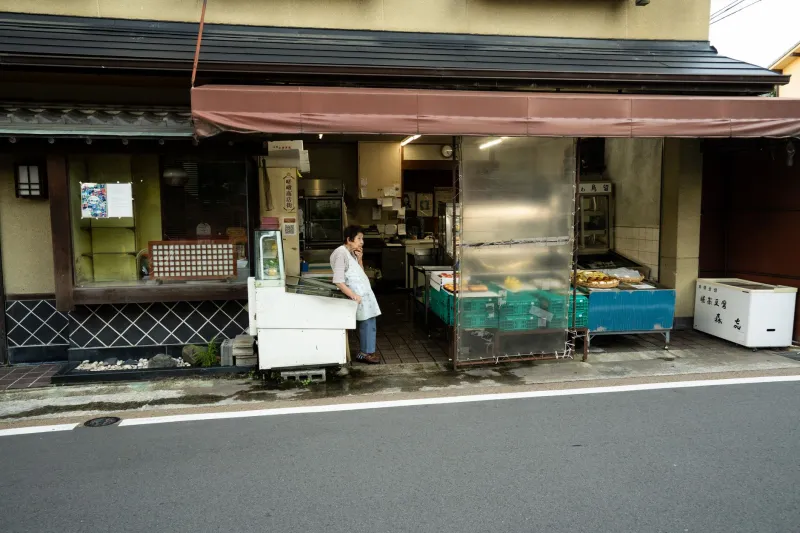
The side streets of Yanase-Minami have a texture that the main roads simply don't. There are shops so small they don't have signs — just a sliding door cracked open and the smell of something good drifting out. There are pocket gardens tucked between buildings, maintained by residents who never ask for credit. There are hand-lettered notices on telephone poles about lost cats and upcoming neighborhood clean-up days, the kind of hyperlocal communication that social media still hasn't figured out how to replace.
When you walk these streets regularly, you start to accumulate a kind of neighborhood knowledge that has real practical value. You learn which bakery puts out day-old bread at a steep discount after 5 p.m. You know that the hardware store owner keeps spare umbrellas behind the counter for regulars caught in sudden rain. You find out about the pop-up lunch that appears every third Thursday in the parking lot behind the post office, where a retired chef serves exactly one dish and sells out in forty minutes.
None of this shows up on any app. You learn it by moving slowly enough to notice it.
The American Problem with Detours
For most of us in the U.S., the idea of deliberately choosing a longer route triggers something close to guilt. We've been conditioned to optimize — our calendars, our workouts, our grocery runs. Inefficiency feels like a moral failure. If you're not moving at maximum speed toward your goal, you're somehow falling behind.
But behind what, exactly? And at what cost?
There's growing research suggesting that the relentless efficiency mindset — the one that has us eating lunch at our desks and answering emails while walking to the bathroom — is actually making us worse at the things we're trying to optimize for. Attention suffers. Creativity drops. Our ability to read social situations, to notice what's changing around us, to feel any genuine connection to the physical places we move through every day — all of it erodes when we're permanently locked into the fastest possible path.
Yanase-Minami's backstreet culture is, in a weird way, a low-tech solution to a very high-tech problem.
Learning to Wander With Intent
There's an important distinction worth making here. This isn't about being aimless. The locals who take the long way around in Yanase-Minami aren't wandering randomly — they have a destination, they have a rough timeline, and they've factored the detour into their morning the same way you'd factor in a coffee stop. The difference is that their detour isn't a transaction. It's an experience.
If you want to try bringing some of this into your own life, the entry point is surprisingly simple. Pick one regular trip you make — to work, to the grocery store, to the gym — and deliberately choose a route that takes five or ten minutes longer. Not because you're lost, but because you've decided to be present for a slightly bigger slice of the world around you. Notice what you see. Let yourself stop once, even briefly, if something catches your attention.
Do it for a week and see what happens to your mood by the time you arrive.
The Neighborhood as Practice
What Yanase-Minami's backstreet wanderers have figured out is that a neighborhood isn't just a container for the places you need to go. It's a living thing, and it rewards the people who pay attention to it. The shop that's been there for sixty years, the neighbor who always has a joke, the light on the temple wall — these aren't distractions from your day. They're the texture that makes your day feel like something more than a series of tasks to complete.
The fastest route gets you where you're going. The scenic one gets you there, too — just with a little more of yourself intact.
Sometimes that's the more efficient outcome, even if it doesn't look like it on a map.