One Thing, Done Perfectly: The Single-Specialty Shops Rewriting the Rules of Retail in Yanase-Minami
Picture walking into a store and asking for something they don't carry. In most American retail environments, that's a minor inconvenience — you pivot to the next aisle, or you pull up Amazon on your phone. But in certain corners of Yanase-Minami, that question lands differently. The shopkeeper might look at you with genuine puzzlement, not because they're being difficult, but because the idea of carrying anything other than their one specialty has simply never occurred to them.
That's the world of the senmonten — the single-specialty shop — and it's one of the most quietly radical concepts you'll encounter in this neighborhood.
What a Bakery That Only Makes Bread Can Teach You
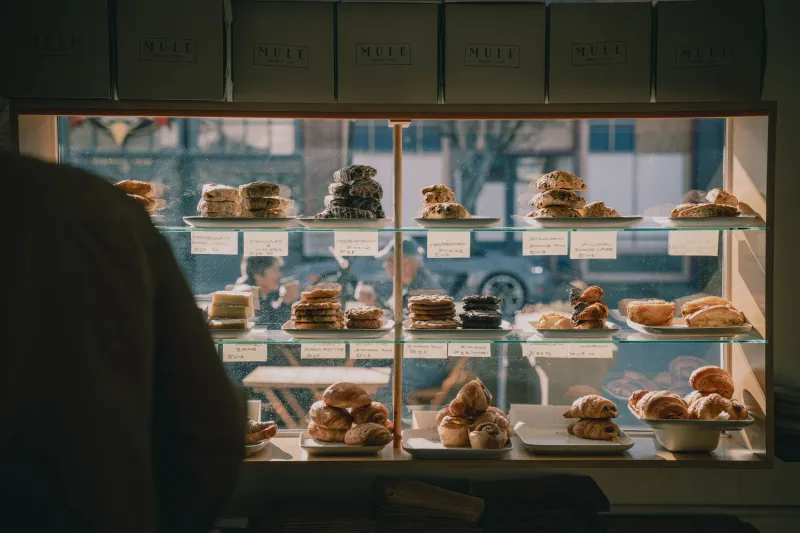
There's a small bakery tucked into one of Yanase-Minami's narrower side streets that has been baking one style of shokupan — thick-cut Japanese milk bread — for the better part of four decades. No croissants. No muffins. No seasonal pumpkin spice anything. Just bread, perfected over thousands of repetitions by a baker who has spent his adult life thinking about flour hydration, fermentation timing, and crust texture.
The loaves sell out most mornings by 10 a.m. Regulars know to arrive early. Newcomers learn the hard way.
For an American consumer raised on the Target model — where you can buy groceries, a flat-screen TV, a swimsuit, and a birthday card in one trip — this kind of deliberate narrowness can feel almost confrontational. Why would you choose to limit yourself? The answer, if you spend any time talking to shop owners in Yanase-Minami, comes back to the same word over and over: shokunin.
The Shokunin Mindset Isn't a Trend
Shokunin is a Japanese concept that roughly translates to "craftsman" or "artisan," but that translation undersells it. A shokunin isn't just someone who is good at their job. They're someone who has organized their entire identity around the relentless pursuit of excellence in a single discipline. The sushi chef who has spent 10 years doing nothing but preparing rice before he's allowed to touch fish. The knife sharpener who has studied blade geometry the way some people study medicine.
In Yanase-Minami, this philosophy bleeds out of traditional crafts and into everyday commerce. The tobacconist who has spent 40 years learning the provenance, aging characteristics, and humidity preferences of his pipe tobacco inventory isn't just a shopkeeper — he's a specialist in the truest sense. Ask him a question about his product and you'll get an answer that no algorithm, no FAQ page, and no big-box retail associate could ever replicate.
That depth of knowledge is the product. The tobacco is almost secondary.
How This Contrasts With the American Retail Brain
American consumer culture has, for decades, optimized relentlessly toward convenience and breadth. Walmart, Amazon, Costco — the dominant retail logic is that more options, under one roof, at the lowest possible price, wins. And by many measures, it does win. The efficiency is real. The savings are real.
But something gets lost in that trade. When a store carries 47 varieties of olive oil, the staff member in that aisle almost certainly can't tell you which one is cold-pressed, which has the lowest acidity, or which region of Italy produces the fruitiest finish. The breadth of inventory and the depth of expertise have become inversely related. The more a store sells, the less anyone working there can actually know about any of it.
Yanase-Minami's specialty shops make the opposite bet. By narrowing the offering, they deepen the expertise. And in doing so, they create something that's genuinely hard to replicate at scale: trust.
When the woman who runs the small dried-goods shop on the corner recommends a particular variety of dashi, you believe her. Not because she has a five-star rating on an app, but because she has been selling nothing else for 25 years and has staked her reputation on that one product category.
The Economics Are Harder — and That's Kind of the Point
Let's be honest: running a single-specialty shop is not the easy path. Margins can be thin. Foot traffic depends heavily on a loyal base. You can't offset a slow week in one department by pushing sales in another, because there is no other department.
Shop owners in Yanase-Minami who've gone this route tend to acknowledge the difficulty without romanticizing it. What keeps them going isn't a business strategy so much as a sense of obligation — to the product, to the craft, and to the customers who depend on them to know what they're talking about.
There's something almost stubborn about it, and maybe that's the point. In an era when the default move is to diversify, to pivot, to add a revenue stream, choosing to go deeper instead of wider is a kind of quiet defiance.
What Americans Are Starting to Rediscover
Interestingly, there are signs that U.S. consumers are beginning to crave exactly this kind of focused expertise. The rise of specialty coffee shops that obsess over single-origin beans, the independent bookstores that have survived by becoming true community hubs with deeply knowledgeable staff, the butcher shops and fishmongers making comebacks in urban neighborhoods — these are all expressions of the same hunger.
People want to talk to someone who actually knows things. They want to trust that the person behind the counter has thought more about this product than they have. That's not nostalgia — it's a rational response to the overwhelming, undifferentiated noise of modern retail.
Yanase-Minami's senmonten have always known this. They didn't need a cultural moment to tell them.
A Different Measure of Success
The next time you're standing in a Yanase-Minami specialty shop — whether it's a tiny confectionery that makes exactly three types of wagashi, or a stationery dealer who has curated one wall of fountain pen inks with the care of a museum curator — pay attention to how it feels.
There's a particular kind of calm in a place where the scope is clear and the expertise is deep. Nobody's trying to upsell you into a product category you didn't come in for. Nobody's pushing a loyalty app. The transaction is simple: you need something specific, and the person across the counter has spent years becoming the right person to help you with exactly that.
That's not a quaint relic of pre-Amazon commerce. In Yanase-Minami, it's an ongoing argument — made one loaf of bread, one pipe tobacco blend, one perfectly wrapped confection at a time — that doing one thing extraordinarily well is still worth something.
Maybe it's worth more now than ever.