When 'Maybe' Means 'Absolutely Not': Cracking the Code of Polite Refusal in Yanase-Minami
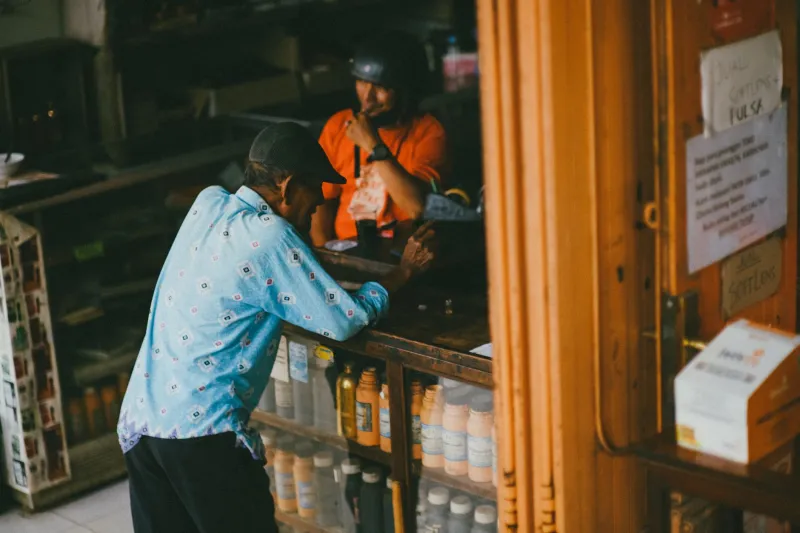
Let's say you're standing at the counter of a small izakaya tucked into one of Yanase-Minami's narrow side streets. You ask if the kitchen can swap out the daikon in your order for something else. The server smiles warmly, tilts her head ever so slightly, draws a slow breath in through her teeth, and says, "Chotto muzukashii desu ne..." — roughly, "That would be a little difficult."
She hasn't said no. She hasn't said yes. But she has absolutely said no.
If you grew up in the US, where directness is generally considered a virtue and "no" is a complete sentence, this kind of exchange can feel confusing — or even a little maddening. But once you understand what's actually happening in these moments, you start to see them everywhere in Yanase-Minami, and honestly? They're kind of beautiful.
Why "No" Is Rarely Said Out Loud
Japanese communication is built around a concept called ma — the meaningful use of space, silence, and indirection. Saying a blunt "no" to someone's face risks damaging what locals call wa, or social harmony. It puts the other person in an uncomfortable position. It creates friction. And in a tight-knit neighborhood like Yanase-Minami, where you might run into the same shopkeeper, neighbor, or noodle-shop owner three times a week, friction is something people actively work to avoid.
So instead of shutting a door, people here tend to leave it open just a crack — just enough for you to understand that walking through it isn't really an option, while still preserving everyone's dignity. It's a system that requires both parties to be in on the game. And if you're not, you can end up wildly misreading a situation.
The Vocabulary of Gentle Decline
There are a few phrases and gestures that do the heavy lifting in these exchanges. Once you know what to listen and look for, they become surprisingly easy to spot.
"Chotto..." — This little word, which literally just means "a little" or "a moment," is one of the most loaded terms in everyday Japanese conversation. When someone says chotto and then trails off, or pairs it with a hesitant expression, they are almost certainly declining your request. It's the verbal equivalent of a polite door quietly swinging shut.
The teeth-sucking inhale — If you hear a soft hissing sound as someone draws air in through their teeth while you're making a request, brace yourself. That sound — called saa or sometimes just described as ha — signals that what you're asking for is complicated, inconvenient, or flat-out impossible. It's not rude. It's actually a courtesy signal, giving you a moment to gracefully back off before a harder answer has to be given.
"Muzukashii desu" — "That would be difficult." This is the workhorse of polite refusals. It doesn't assign blame, it doesn't make anyone feel bad, and it leaves room for the conversation to move in a different direction. In Yanase-Minami's shops and restaurants, you'll hear this one a lot. Train yourself to hear it as a firm no with a soft landing.
Silence with a smile — Perhaps the trickiest one for Americans to decode. In US culture, silence after a question often signals that an answer is being considered. In Japan, prolonged silence paired with a neutral or pleasant expression can actually mean the opposite — that the person is waiting for you to recognize that the answer is no and move on. It's uncomfortable at first, but leaning into it (rather than filling it with more words) is the right move.
Real Scenes from the Neighborhood
Think about what this looks like in practice. Imagine you're chatting with your neighbor in Yanase-Minami — maybe you've asked if they'd be interested in joining a casual weekend barbecue you're throwing. They smile, nod slowly, say "Hmm, that sounds nice" and then mention that weekends are usually busy for them. They don't commit. They don't suggest another time. They just... let the sentence sit there.
That's a no. A kind one, but a no.
Or picture yourself at one of the neighborhood's beloved small grocery shops, asking if they can order a specific imported product for you. The shop owner bows slightly, makes a thoughtful face, and says something like, "We'll have to look into that" — and then changes the subject. Don't wait for a callback. That item isn't coming.
None of this is deceptive. It's actually a deeply considerate way of communicating. The person declining is doing real emotional work to make sure you don't feel rejected or embarrassed. Recognizing that effort — and responding gracefully — is what makes you a good neighbor, customer, or guest in this community.
What Americans Can Take Away
Here's the thing: once you get used to reading these signals in Yanase-Minami, you start noticing how blunt American communication can feel by comparison. Not better or worse — just different. In the US, we tend to value clarity and efficiency in conversation. In Japan, the priority is relational smoothness.
Both approaches have trade-offs. American directness can save time and prevent misunderstandings. Japanese indirection preserves feelings and keeps relationships intact. But spending time in a neighborhood like Yanase-Minami teaches you that there's real skill involved in saying no without ever quite saying it — and that skill deserves some respect.
For anyone visiting or living here, the practical advice is simple: slow down, pay attention to the full picture of what's being communicated (tone, body language, what isn't said), and resist the urge to push when you sense hesitation. If you ask for something and get a chotto with a head tilt, smile, say thank you, and let it go. You'll earn more goodwill that way than any amount of persistence could buy.
The Bigger Picture
Yanase-Minami is a neighborhood that rewards attentiveness. The more time you spend here, the more you realize that the real conversations often happen in the spaces between words — in a pause, a glance, a polite non-answer. Locals aren't being evasive. They're being careful. And careful, in this context, is a form of kindness.
So next time someone in Yanase-Minami tells you something is "a little difficult," don't push for clarification. Just nod, smile back, and know that you've just been let down as gently as humanly possible. That's not a communication failure. That's the whole system working exactly as intended.