Empty Space, Full Life: What Yanase-Minami's Minimalist Streets Are Really Trying to Tell You
Walk down almost any side street in Yanase-Minami on a weekday morning and something quietly unusual happens: you stop reaching for your phone. There's no visual noise demanding your attention, no neon sign competing with the one next to it, no storefront window crammed edge-to-edge with merchandise. Just clean lines, a small hand-lettered sign, maybe a single ceramic pot near a doorway. And somehow, that restraint pulls you in harder than a Times Square billboard ever could.
This isn't an accident. It's a philosophy — one with a name, a long history, and some surprisingly practical lessons for anyone feeling buried under the weight of too much stuff, too many choices, and too much noise.
Meet 'Ma': The Concept That Shapes Everything Here
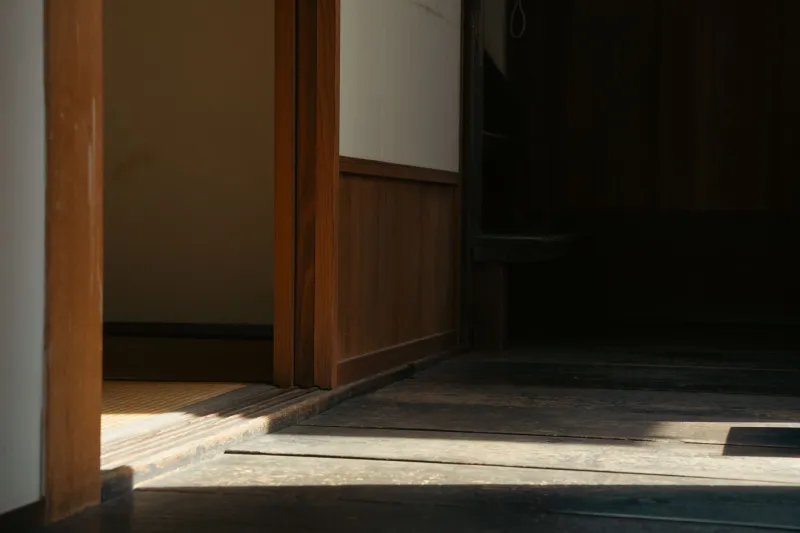
The Japanese word ma (間) doesn't translate cleanly into English, which is part of why it tends to stop Westerners cold when they first encounter it. It refers roughly to negative space — the pause between notes in music, the gap between objects on a shelf, the silence between words in a conversation. But ma isn't just absence. It's intentional absence. It's the idea that what you leave out is just as meaningful as what you put in.
You see ma everywhere in Yanase-Minami once you know what you're looking at. In the way a small café keeps half its wall completely bare, drawing your eye to the single framed print hanging there. In the way a neighborhood hardware shop arranges maybe a dozen items in a window display that could easily fit a hundred. In the way a longtime resident, Keiko Hamada, keeps her entryway — what the Japanese call the genkan — so spare that the one small vase of seasonal flowers sitting on the ledge feels almost ceremonial.
"Americans always ask me if I'm still moving in," Keiko laughs, gesturing around her apartment. "They think something is missing. But that's the point. The space lets you breathe. It lets the things that are there mean something."
Designers Who Build With Emptiness
Local interior designer Tatsuya Mori has spent the better part of two decades helping Yanase-Minami residents reconfigure their homes around this principle, and he's noticed a significant uptick in interest from people who've relocated from abroad — particularly from the United States.
"They come in overwhelmed," he says. "They've downsized from a larger American home, and they're trying to fit everything they owned into a smaller space. But the problem usually isn't the space. It's the assumption that every surface needs to be used."
Mori's approach begins with what he calls a "visual audit" — essentially, standing in each room and asking what the eye lands on first, second, third. If there's no clear hierarchy, no sense of rest between focal points, the room feels chaotic even if it's technically tidy. His fix is rarely about buying new furniture or storage solutions. It's almost always about removing things.
"Ma isn't a design trend," he's careful to point out. "It's closer to an ethical position. You're saying: this object deserves to be seen. This space deserves to exist. You're making a commitment."
The Storefront as a Lesson in Restraint
Step into the Yanase-Minami shopping district and you'll notice that the most beloved local shops — the ones that have been here for decades and show no signs of going anywhere — tend to look almost understated from the outside. A ceramics shop with three bowls in the window. A stationery store with a single notebook propped on a small wooden stand. A bakery where the only exterior signage is a modest noren curtain hanging in the doorway.
Compare that to the visual aggression of, say, a strip mall in suburban Atlanta or a big-box store entrance in the Midwest, and the difference feels almost philosophical — because it is.
Shopkeeper Noriko Iwata, who has run a small textile shop in the neighborhood for over thirty years, puts it plainly: "If I show you everything at once, nothing is special. But if I show you one thing well, you want to know what else is inside. The empty space creates curiosity. It creates desire without pressure."
For American retail culture, which has long operated on the assumption that more product visibility equals more sales, this is almost a subversive idea. And yet the brands that have most successfully captured a certain kind of aspirational consumer in the US — think of the clean, nearly empty shelves of a high-end Apple Store, or the spare aesthetic of certain direct-to-consumer home goods companies — are borrowing directly from this same well, whether they acknowledge it or not.
What This Actually Means for Your Living Room
Okay, so you're back home in Columbus or Portland or wherever, and your apartment looks like a storage unit that got into a fight with a Target clearance section. What does any of this have to do with your real life?
Quite a bit, it turns out. The residents and designers of Yanase-Minami aren't operating in a vacuum — they're living in smaller spaces than most Americans, often with tighter budgets, and still managing to create homes that feel considered, calm, and genuinely personal. The ma philosophy offers a few concrete starting points.
Start with one surface. Pick a single shelf, countertop, or table and remove everything from it. Then put back only what you'd genuinely miss. Notice how the remaining objects suddenly feel more present, more yours.
Think about the pause. Before adding something new to your space — a piece of decor, a piece of furniture, even a new app on your phone — ask what it's displacing. What silence is it filling, and does that silence actually need filling?
Let rooms breathe. Keiko Hamada keeps one corner of her living room entirely empty. No furniture, no plant, no lamp. Just floor and wall. "It's where my eyes go to rest," she says. "Every room needs somewhere for your attention to land that asks nothing of you."
The Deeper Takeaway
There's something almost countercultural about ma in the current American moment, when every algorithm is optimized to fill your attention with more, and every retailer is competing for the last available inch of your visual field. The idea that emptiness could be a form of generosity — that leaving space is a way of honoring both the objects that remain and the people who inhabit the space — runs directly against the grain of consumer culture as most of us have absorbed it.
But spend enough time in Yanase-Minami, watching how people move through their neighborhoods and their homes with a kind of unhurried intentionality, and it starts to feel less like a design philosophy and more like a survival strategy. Not for the space around you, but for the space inside you.
Maybe that's what the empty wall is really saying: slow down, look closer, and trust that less can hold more than you think.