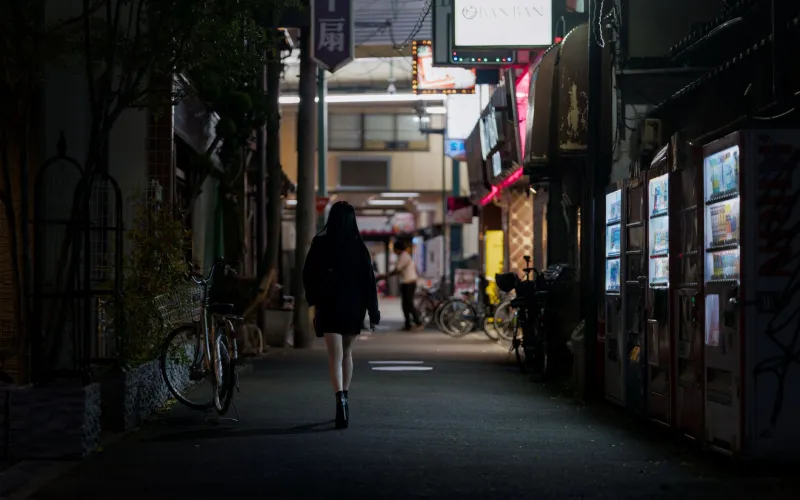
Listen to the Neighborhood: The Invisible Clock That Rings, Chimes, and Calls Across Yanase-Minami

Photo by Photo by mos design on Unsplash on Unsplash
Most travelers pack their eyes for Japan and forget to bring their ears. But spend a few days moving through Yanase-Minami and you start to realize the neighborhood is constantly talking — through bells, jingles, chimes, and calls that map the hours, mark the seasons, and quietly hold the community together. It's an acoustic infrastructure most American suburbs dismantled decades ago, and once you hear it, the silence back home sounds very different.
5 PM and the Sky Rings
If you're in Yanase-Minami as the afternoon tips toward evening, you'll hear it: a broadcast chime drifting across the rooftops, gentle and unhurried. It's the bōsai musen — the municipal public address system — and in most neighborhoods, it plays a short melody at a set time each day. Officially, it's a test of the emergency broadcast network. Practically, it's the neighborhood's way of saying it's getting late, head home.
Children playing in the park hear it and know. Parents cooking dinner hear it and don't need to check the clock. Elderly residents sitting on their stoops hear it and feel, perhaps without consciously registering it, that the day is proceeding as it should.
In the US, we've outsourced this function entirely to our phones. Notifications, alarms, calendar pings — all of it private, individual, and silent to everyone but you. The Japanese municipal chime is the opposite: it's a shared signal, a public moment of synchronization. The whole neighborhood moves together, even if no one talks about it.
The Jingle That Means Ice Cream (and a Few Other Things)
If you've ever spent a summer afternoon in Yanase-Minami, you've probably heard the slow, tinny melody of a yatai or roving vendor truck before you've seen it. The sound system is unmistakable — not unlike an American ice cream truck, but often more elaborate, layered, and specific. Different vendors have different songs. Locals learn them the way you learn a ringtone: automatically, without trying.
The yakiimo truck — selling roasted sweet potatoes — has a particular warbling call, sometimes a recorded voice over a simple melody, that signals autumn as reliably as falling leaves. The chindon'ya, a traditional street advertisement ensemble that still appears occasionally for shop openings and local events, brings a brass-and-drum cacophony that feels both antique and electric.
These sounds aren't background noise. They carry commercial information, seasonal cues, and cultural memory all at once. A kid in Yanase-Minami who grows up hearing the yakiimo call will hear it thirty years later and feel autumn in their chest. That's not marketing. That's a sonic landmark.
Crossing Guards, School Bells, and the Sound of Safety
Walk near a school in Yanase-Minami during morning arrival or afternoon dismissal and the neighborhood's acoustic texture shifts noticeably. Electronic crossing signals chirp in distinct patterns — different tones for different directions — giving visually impaired pedestrians a full map of the intersection in sound. Recorded announcements remind drivers to watch for children. The school bell itself, often a short melody rather than a blunt ring, ripples out past the gates and into the surrounding blocks.
All of it adds up to what you might call an auditory safety net — a layer of communication that runs parallel to the visual world and catches people who might otherwise fall through the cracks. It's thoughtful design that most American cities have either never implemented or quietly let deteriorate.
The contrast becomes sharp when you think about the average US suburban school zone: maybe a flashing yellow light, a speed limit sign, and a lot of hope. The acoustic dimension has been almost entirely abandoned, replaced by the assumption that everyone is watching a screen and can receive a push notification if something matters.
Festival Season and the Neighborhood's Annual Voice
Then there are the sounds that only come around once a year, and their rarity is precisely what makes them hit so hard.
During the summer festival season, the taiko drum patterns that drift from Yanase-Minami's shrine grounds do something to the air in the surrounding streets. It's not loud in the way a concert is loud — it's present in a way that's hard to describe. The sound moves through walls. It shows up in your chest before your ears register it. And for locals, it's a signal that time is doing something special: the ordinary rhythm of the week is being suspended for something older.
Winter brings its own sounds — the distant toll of temple bells on New Year's Eve, the creak and pop of cold-weather street stalls, the particular quiet that settles over the neighborhood between Christmas (a commercial event in Japan) and the deeply local observance of Oshōgatsu. Each season has a soundtrack, and Yanase-Minami plays it faithfully.
What Silence Costs
Spend enough time tuned into Yanase-Minami's acoustic landscape and returning to a typical American suburb can feel like walking into a room where someone turned off all the lights. The absence isn't peaceful — it's a little eerie.
American neighborhoods were once louder in the good ways: church bells, noon whistles at factories, the specific jingle of the milk truck, the calls of street vendors in older city neighborhoods. Most of that got zoned out, automated away, or simply abandoned as urban planning focused on car traffic and visual signage.
What Yanase-Minami holds onto — sometimes consciously, sometimes just through habit — is the understanding that a neighborhood is also a soundscape. That the right sounds at the right times create a sense of structure, safety, and belonging that no app can replicate.
Bring your ears next time. You'll hear things that stay with you long after you've left.