Shutting Down on Purpose: What Yanase-Minami's Shop Owners Can Teach America About Quitting Time
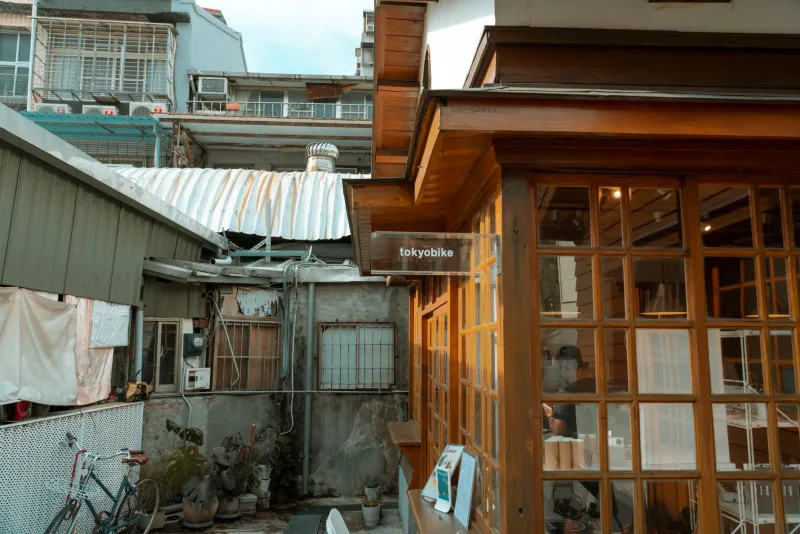
Walk through Yanase-Minami on a Tuesday evening and something will feel a little off — at least if you're used to American commercial strips where the lights stay on until 10 p.m. and the "Open" sign never seems to flip. Here, by early evening, the shutters are rolling down. Handwritten closing-time cards are tucked into windows. The street settles into something quieter, almost deliberate.
It's not a slow economy. It's not a lack of ambition. It's a choice — and it's one that a growing number of people back in the States might want to start paying attention to.
The Clock Isn't the Enemy
Takahashi-san has run a small stationery and paper goods shop in Yanase-Minami for going on 22 years. His inventory — handmade washi paper, calligraphy brushes, ink pots in colors you didn't know existed — draws in customers from neighboring districts and the occasional wide-eyed tourist. He closes at 6 p.m., every day, without exception.
"People sometimes knock after hours," he says, laughing a little. "I don't answer. It's not that I don't care about business. It's that I care about what comes after business."
What comes after, for Takahashi-san, is dinner cooked from scratch, an evening walk, and time with his adult daughter when she visits. He's not clocking out because he's tired. He's clocking out because he decided, a long time ago, that the shop would serve his life — not the other way around.
This is a distinction that sounds almost radical if you've grown up absorbing American startup mythology, where grinding past midnight is a badge of honor and "I'll sleep when I'm dead" gets reposted as inspiration.
Built Into the Neighborhood Rhythm
What makes Yanase-Minami's approach to closing time interesting isn't just individual discipline — it's how deeply the practice is woven into the neighborhood's social fabric. When one shop closes, others follow. Foot traffic shifts. The local izakaya fills up. Residents who've finished their errands move into a different mode entirely.
There's a communal exhale that happens around that hour, and it's not accidental. Longtime residents describe it as something almost choreographed — not by any official policy, but by decades of shared habit and mutual respect.
Miyamoto-san, who sells handmade pickles and fermented goods from a narrow shopfront she inherited from her mother, puts it plainly: "If I stayed open late, I'd be out of step with everyone else. The neighborhood has a pace. You either move with it or you wear yourself out fighting it."
For Americans used to 24/7 convenience and the assumption that longer hours equal more success, this idea of syncing with a community rhythm rather than competing against it can feel almost counterintuitive. But Miyamoto-san's shop has outlasted three convenience store chains that opened and closed nearby in the same period. Longevity, she suggests, has something to do with not burning yourself down.
The Math That Doesn't Add Up — Until It Does
Here's where American entrepreneurs might raise an eyebrow: doesn't closing early mean leaving money on the table?
Maybe. But shop owners in Yanase-Minami tend to think about profitability differently. Rather than chasing volume, many of them focus on depth — a smaller, more loyal customer base, products that justify their price, and a reputation built over years rather than quarters.
Fujiwara-san, who operates a tiny tea shop that seats exactly eight people, has turned away expansion opportunities twice. "Someone offered to help me open a second location," he says. "I thought about it for about a day. Then I realized I'd have to be two places at once, or hire someone to be me — and neither of those things is possible."
His shop closes at 5:30 p.m. He's home by 6. And he's been doing this for 17 years with no signs of stopping.
The parallel to American small business culture is worth sitting with. The U.S. has seen a wave of "solopreneur" burnout stories in recent years — people who built something they loved and then worked it into the ground trying to scale it. Yanase-Minami's model suggests a different question: what if the goal isn't to grow the thing, but to keep it alive long enough that it becomes part of the neighborhood's identity?
Rest as a Business Strategy
It would be easy to frame this as a work-life balance story, and it partially is. But the shop owners here push back a little on that framing. "Balance" implies two equal forces in tension. What they describe feels more like integration — work and rest as parts of the same continuous loop, each feeding the other.
Takahashi-san describes how his evening walks often spark ideas for new products or displays. Miyamoto-san says her best fermentation experiments happen when she's not stressed, which means they happen because she protects her off hours. Fujiwara-san is pretty blunt about it: "A tired tea maker makes bad tea. It's not complicated."
There's a growing body of research in the U.S. that backs this up — studies on decision fatigue, creativity and rest cycles, the long-term costs of overwork. But it's one thing to read about it in a Harvard Business Review article and another to watch it play out in a neighborhood where the shops have been standing for generations.
What You Can Actually Take Home
None of this is to say that American business culture is simply wrong and Yanase-Minami has it all figured out. Context matters — different markets, different pressures, different definitions of success. But there are a few things worth borrowing.
The idea that closing time is a commitment, not a suggestion. That your business should have an end to its day, even if you're a freelancer working from a home office in Ohio. The concept that community rhythm — knowing when your neighbors, your customers, your block is winding down — is actually useful information, not something to override.
And maybe most of all: the quiet confidence of a shop owner who locks the door at 6 p.m. and doesn't feel guilty about it. Who built something sustainable precisely because they refused to let ambition eat them alive.
The shutters come down in Yanase-Minami, and the neighborhood breathes. It's a small thing. It's also, depending on where you're standing, kind of everything.