Nothing to See Here — and That's Exactly the Point: How Yanase-Minami's Quiet Spaces Rewire Your Brain
Let's be honest: if you dropped most Americans into Yanase-Minami on a Tuesday afternoon with no itinerary, they'd probably check their phones within four minutes. Not because nothing is happening — but because what is happening doesn't announce itself. No music bleeding out of storefronts. No vendors hawking anything. No digital billboard cycling through ads at a seizure-inducing clip. Just... a street. Some trees. Maybe a woman walking slowly with a canvas bag. A cat on a wall.
And somehow, that's everything.
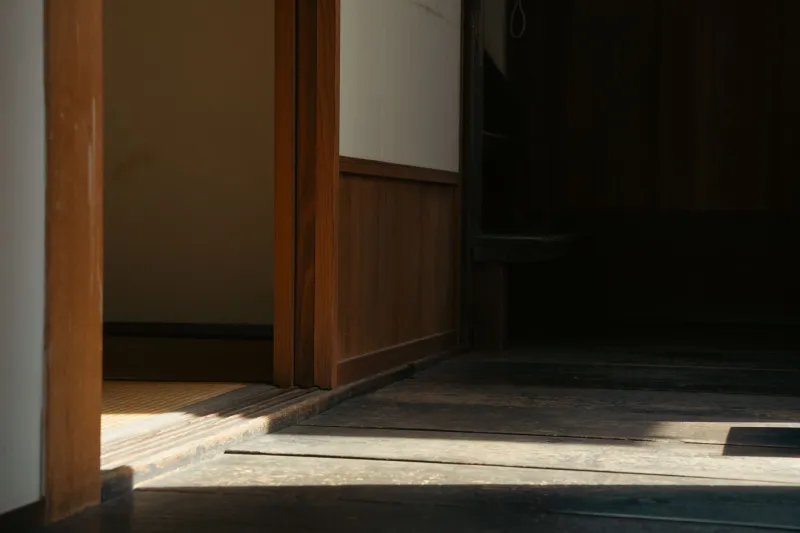
The longer you stay in this neighborhood — really stay, not just pass through — the more you start to suspect that the quiet isn't accidental. It's architectural. Cultural. Almost philosophical. And once you start seeing it that way, the silence stops feeling like something's missing and starts feeling like something's been given to you.
The American Noise Default
Here's a useful starting point: think about the last time you walked through a mall, an airport, a city block in Chicago or Houston or downtown LA. What was the baseline sound level? Probably somewhere between "busy coffee shop" and "mild construction zone." Background music, ambient chatter, mechanical hum, notification sounds leaking from someone else's pocket — it's all just there, layered and constant.
We're so used to this that we've stopped hearing it as noise. It's just the texture of being in public. And when that texture disappears — when you step into a space that's genuinely, deliberately quiet — the brain does this funny thing where it interprets the absence as a problem. Something must be wrong. Is the place closed? Is this area sketchy? Am I missing something?
That's the reaction a lot of American visitors have when they wander into Yanase-Minami's residential pockets or sit in one of the neighborhood's small, unhurried parks. The silence triggers a mild alarm. And then — if they stick around long enough — the alarm fades, and something else takes its place.
What the Parks Are Actually Doing
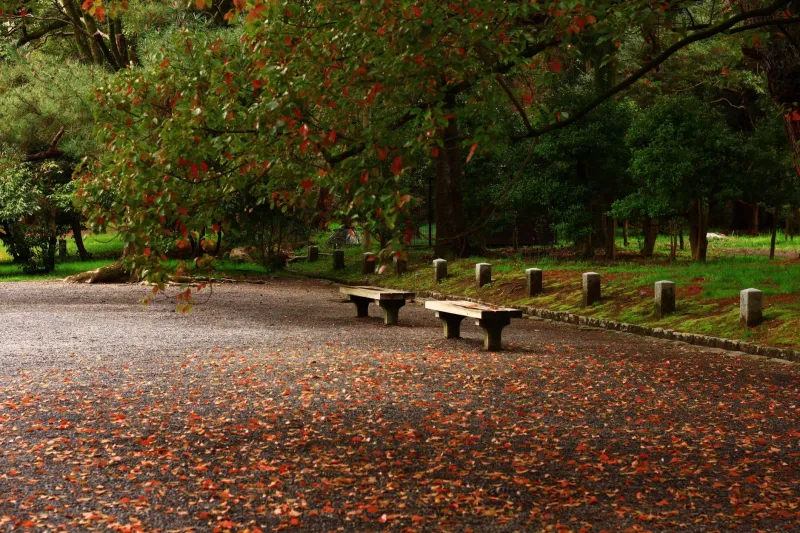
There's a park near the center of Yanase-Minami that I've sat in more times than I can count. It's not large. There's no splash pad, no fitness equipment, no programmed events. A few benches, some well-maintained greenery, and a gravel path that goes nowhere dramatic.
On any given afternoon, you'll find elderly residents moving through it slowly, maybe a parent watching a toddler investigate a rock, occasionally a salaryman eating a convenience store onigiri with the focused attention of someone defusing a bomb. Nobody's performing leisure. Nobody's making content. They're just... present.
What's striking — once you recalibrate — is how connected this feels. Not connected like Wi-Fi. Connected like: everyone in this park is actually here, in this moment, sharing the same unhurried air. In a world where most public spaces are designed to process people quickly and keep them spending, a space that asks nothing of you is quietly radical.
Japanese aesthetic philosophy has a concept called ma — often translated as "negative space" or "pause" — that gets at something close to this. It's the idea that emptiness isn't a void to be filled but a presence in its own right. The gap between notes in music. The white space in a painting. The silence in a conversation that says more than words would. Yanase-Minami's parks, its reading rooms, its unhurried sidewalks — they're all exercises in ma.
Libraries as Cultural Mirrors
If you want a concentrated dose of what this neighborhood values, spend an hour in one of Yanase-Minami's local libraries. Not the big municipal kind — the smaller branch libraries tucked into residential blocks, the ones that feel more like a very organized living room than an institution.
The quiet there isn't enforced so much as assumed. People walk in already softened. They move carefully between shelves. They sit and read with a kind of absorption that you don't see in, say, a Starbucks where someone's typing aggressively and someone else is on a video call without headphones.
What makes this remarkable isn't the absence of noise — it's the presence of attention. Everyone in that space is attending to something: a page, a thought, the particular afternoon light coming through the window. The library isn't just storing books. It's modeling a way of being in the world that prioritizes depth over stimulation.
For Americans raised on the idea that productivity means constant output and leisure means constant entertainment, sitting in that kind of quiet can feel almost transgressive. Like you're doing something wrong by not doing anything louder.
The Street as Conversation
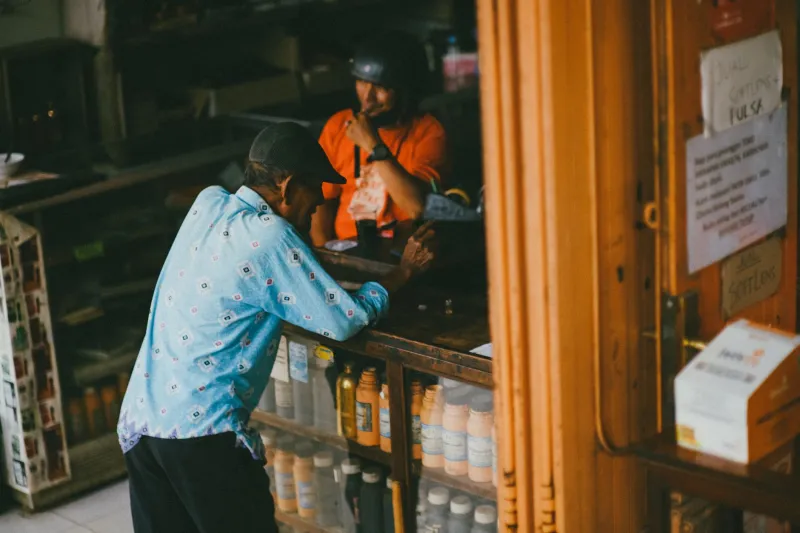
Yanase-Minami's residential streets operate on a frequency that takes adjustment. There's no ambient retail noise, no promotional speakers, no food trucks with generators running. What you get instead is the sound of the neighborhood itself — a bicycle bell, wind through a narrow alley, the distant rhythm of someone's kitchen.
These sounds aren't nothing. They're actually deeply informative once you've slowed down enough to hear them. You can tell what time of day it is by them. You can tell when school has let out, when the evening cooking starts, when the neighborhood is collectively winding down. It's a kind of communication that doesn't require anyone to say a word.
Contrast that with a typical American residential suburb, where the soundscape is either the white noise of HVAC units or a neighbor's lawn equipment — sounds that signal activity but communicate nothing. The silence in Yanase-Minami isn't vacant. It's legible.
Why This Matters for You
Here's the thing: you don't have to move to Japan to take something from this. The real gift of spending time in Yanase-Minami's quiet corners is that it recalibrates your tolerance for stillness. You start to notice, when you get back home, how relentlessly your environment is competing for your attention — and how much of your mental energy goes toward filtering all of it out.
Some visitors come back from Yanase-Minami and make small changes. They turn off the background TV. They eat a meal without a podcast. They sit in a park and don't take a photo of it. These aren't dramatic life overhauls — they're tiny experiments in ma, in leaving space for attention to settle somewhere meaningful.
The neighborhood doesn't advertise itself. It doesn't have to. The quiet speaks, if you're patient enough to listen.
And that, honestly, is louder than anything you'll find on most tourist maps.