Sitting Still on Purpose: How Yanase-Minami Turned Waiting Into a Way of Life
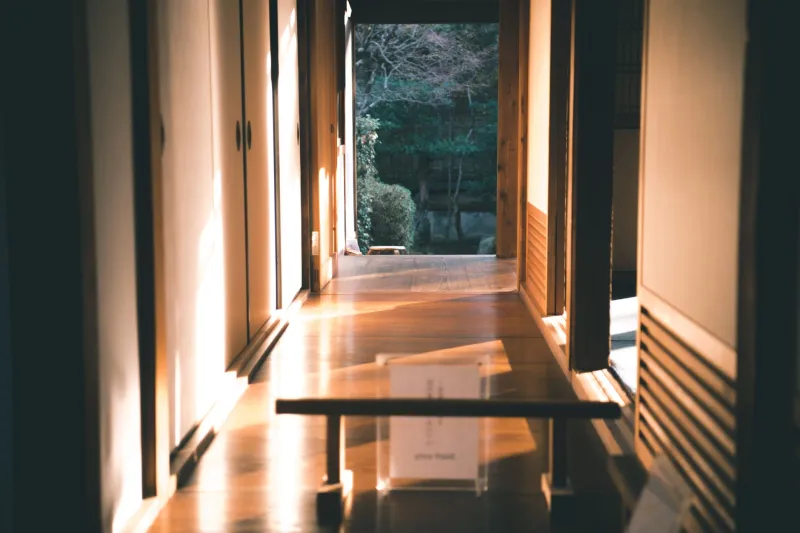
There's a man who comes into the small clinic on Yanase-Minami's east side every Thursday morning. He arrives early — not because he has to, but because he wants to. He brings no phone, no book, no earbuds. He sits, folds his hands in his lap, and watches the light change through the frosted window. The receptionist, Yuki, has worked there for eleven years. She says she's never once seen him look impatient.
"He told me once that Thursday mornings are the only time nobody needs anything from him," she said, laughing softly. "He protects that waiting room like it's a vacation."
If you've spent any time in Yanase-Minami — or honestly, in most of Japan — you've probably noticed that waiting looks different here. It doesn't come loaded with the same frantic energy that Americans tend to bring to it. There's no aggressive phone-checking, no audible sighing, no performative impatience. People wait. And somehow, they seem okay with it.
For a country that's obsessed with punctuality and efficiency, that might seem contradictory. But spend a little time digging into how Yanase-Minami residents actually experience waiting, and you start to realize it's not contradictory at all. It's the whole point.
The Problem With American Waiting
Let's be honest about where most of us in the States land on this. Waiting feels like losing. It feels like time being stolen — by the DMV, by the doctor's office running behind, by the barista who's clearly new and struggling with the espresso machine. We pull out our phones within seconds. We start mentally composing complaint reviews. We treat delay as a personal offense.
And that anxiety isn't entirely irrational. American culture has spent decades telling us that productivity is virtue, that idle time is wasted time, and that if you're not optimizing every moment, you're falling behind. We've internalized it so deeply that even leisure makes us uncomfortable. Vacations need to be packed. Weekends need to be earned and then maximized.
The result? We've lost the ability to just... sit.
What the Ramen Counter Taught Me
One of the first things visitors notice in Yanase-Minami is the line culture around food. There's a particular ramen shop near the covered shopping arcade that regularly draws a queue stretching half a block. People stand in it without complaint. They don't scroll Instagram (mostly). They don't loudly calculate how long it's going to take. They stand, they breathe, they sometimes make quiet small talk with whoever's next to them.
A regular there, a retired schoolteacher named Haruto, explained it this way: "The wait is part of the meal. If you're already frustrated when you sit down, you can't taste the soup properly."
That's not a throwaway line. There's real philosophy packed into it. The idea that your internal state going into an experience shapes the experience itself — that's something we intellectually understand in America but rarely actually practice. We want the soup. We want it now. The waiting is just an obstacle.
Haruto sees it differently. The queue is a transition space. It's where you shift from the pace of your day into the pace of the meal. Skip that transition — or spend it fuming — and you've already diminished what's coming.
Waiting as Reflection, Not Waste
This reframe shows up in other parts of Yanase-Minami life too. At the neighborhood's small medical clinic, the average wait time on a busy day can hit forty-five minutes. In an American context, that would be grounds for a one-star Yelp review and a stern conversation with the front desk. Here, people bring a small notebook, or they simply sit with their thoughts.
One woman, Sachiko, who visits the clinic for monthly check-ins, told us she actually looks forward to the wait. "It's the only time in the week when I have permission to think slowly," she said. "I don't have to decide anything or respond to anyone. I just sit and let my mind go where it wants."
She's describing something that sounds almost meditative — and in a sense, it is. But it's not formal meditation. It's not a wellness app or a guided breathing exercise. It's just a cultural permission slip to be unproductive for a few minutes without guilt.
That permission slip is something a lot of Americans have never been handed.
The Life Transition Wait
Beyond the physical queues and waiting rooms, there's another layer to Yanase-Minami's patience culture that's harder to see but maybe more important: the way locals approach waiting during life's bigger in-between moments.
Job transitions. Relationship changes. The stretch between finishing school and figuring out what comes next. In America, these gaps tend to generate enormous anxiety. We rush to fill them, to explain them, to justify them. We treat uncertainty like a malfunction.
In Yanase-Minami, there's a different vocabulary for these periods. Locals talk about them with a kind of quiet acceptance — not passivity, but a recognition that some things unfold on their own timeline and fighting that timeline mostly just exhausts you.
A young woman named Emi, who spent eight months between jobs after leaving a position that wasn't right for her, described it this way: "My grandmother kept telling me that the field needs to rest before it can grow something good. I thought she was just being nice. But after a few months, I started to understand what she meant. I was doing things during that time — reading, walking, thinking — that I never would have done if I'd rushed into the next thing."
What Americans Could Actually Take From This
None of this is about romanticizing Japan or pretending that patience is some kind of magic fix. Yanase-Minami has its stresses, its pressures, its people who absolutely lose it in the grocery store checkout line. It's not a utopia of calm.
But there are real, transferable ideas here. The notion that waiting doesn't have to be a failure state. That idle moments can be deliberately inhabited rather than desperately escaped. That the quality of your attention while you wait shapes the experience that comes after.
Practically speaking, that might mean leaving your phone in your pocket the next time you're in a waiting room. It might mean reframing the line at the coffee shop as two minutes of mental breathing room rather than two minutes of lost productivity. It might mean, when you're in between things — jobs, relationships, chapters — letting yourself be in between instead of sprinting toward the next fixed point.
Yuki, the receptionist at the Thursday morning clinic, put it simply when we asked her what she's observed over eleven years of watching people wait.
"The ones who fight it always look tired when they finally get called," she said. "The ones who let it be... they come in looking like they just woke up from a good nap."
Maybe that's the whole lesson. Waiting isn't the enemy of your day. How you hold it might be.